Recent few-shot object detection (FSOD) methods have focused on augmenting synthetic samples for novel classes, showing promising results with the rise of diffusion models. However, the diversity of such datasets is often limited because they lack awareness of typical and hard samples, especially regarding foreground and background relationships. To tackle this, we propose a Multi-Perspective Data Augmentation (MPAD) framework. For foreground-foreground relationships, we propose in-context learning for object synthesis (ICOS) with bounding box adjustments to enhance the detail and spatial information of synthetic samples. Inspired by the large margin principle, we design a Harmonic Prompt Aggregation Scheduler (HPAS) to mix prompt embeddings at each timestep of the diffusion generation process, producing hard novel samples. For foreground-background relationships, we introduce a Background Proposal method (BAP) to sample typical and hard backgrounds. Our framework significantly outperforms traditional methods, achieving an average increase of 17.5% in nAP50 over the baseline on PASCAL VOC.
MPAD (Multi-Perspective Data Augmentation) improves few-shot object detection by generating better synthetic training data with diffusion models. Existing diffusion-based augmentation lacks awareness of typical vs. hard samples and of foreground–background relationships, which limits diversity.
MPAD attacks this from three angles. For foreground–foreground relationships, In-Context learning for Object Synthesis (ICOS) with bounding-box adjustment sharpens the detail and spatial information of synthesized instances. Inspired by the large-margin principle, a Harmonic Prompt Aggregation Scheduler (HPAS) mixes prompt embeddings at each diffusion timestep to produce hard novel samples that tighten class boundaries. For foreground–background relationships, a Background Proposal method (BAP) samples both typical and hard backgrounds.

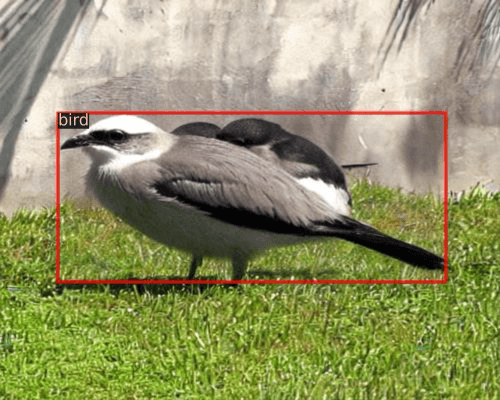
Across multiple few-shot object detection benchmarks, MPAD significantly outperforms traditional augmentation, with an average gain of 17.5% in nAP50 over the baseline on PASCAL VOC. The paper was published at ICLR 2025; code is publicly available.